

- Mia Keelan
- November 9, 2026
- Interviews
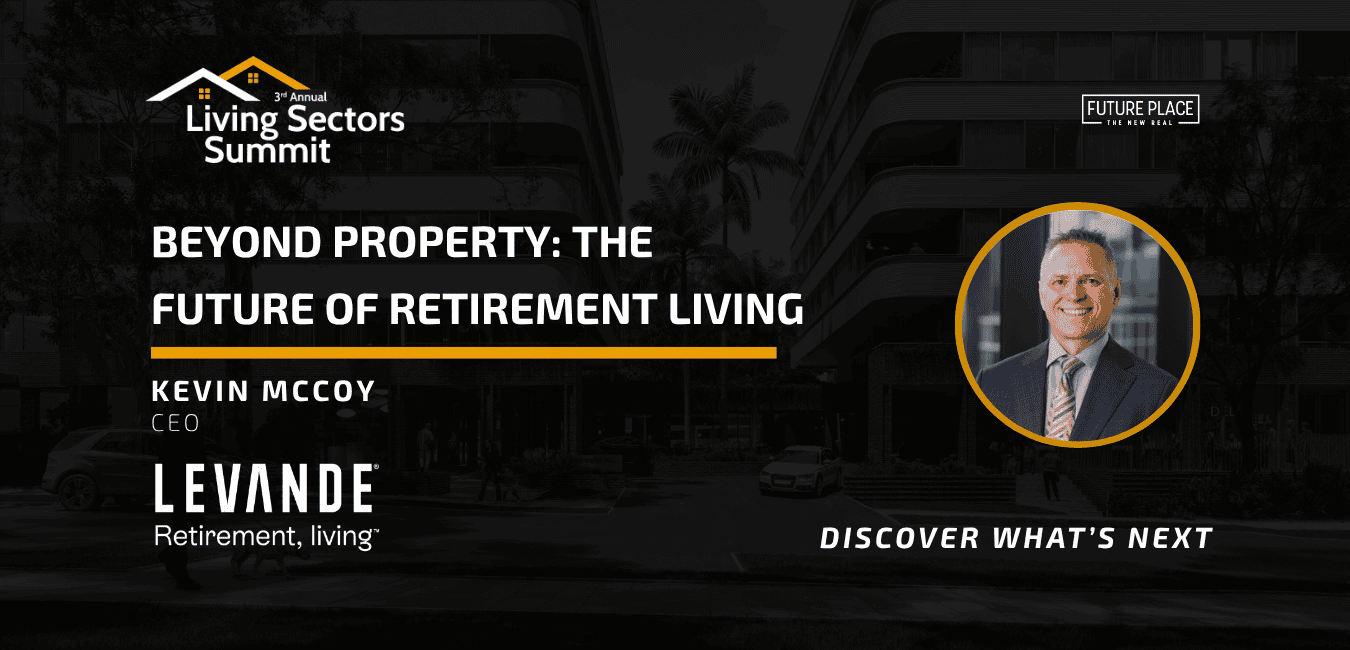
As retirement living becomes an increasingly important part of Australia’s broader housing landscape, the sector is facing a shift in how communities are developed, operated and experienced. Growing demand from older Australians is creating new opportunities for operators, but long-term success will depend on more than the quality of the physical assets.
For Levande CEO Kevin McCoy, the focus is on recognising retirement living as an operating business built around customer trust, service quality and the ability to create communities where residents can maintain their independence and connection.
In this Q&A, McCoy discusses the changing expectations of residents, the operational challenges of managing larger portfolios, the role of technology and data, and why strong customer outcomes are fundamental to the long-term commercial sustainability of retirement living.
Q: As CEO of Levande, how are you seeing the retirement living sector evolve as it becomes a more mainstream part of Australia’s housing and living sectors market?
KEVIN MCCOY:
I think the biggest change is that retirement living is increasingly being recognised as much more than a property proposition. It’s a housing solution, certainly, but it’s also an operating business and a customer business.
That matters because the building is only the beginning of the relationship. In retirement living, the operator remains involved throughout the resident journey. We have to earn people’s trust not once, at the point of sale, but every day through the quality of the community, the service we provide and the promises we make.
As the sector becomes more mainstream, I think that operating capability will become every bit as important as development capability. That is a healthy evolution for the sector.
Q: What are the biggest shifts you are seeing in what residents expect from retirement living communities today?
KEVIN MCCOY:
Today’s customer is very different from the traditional stereotype of a retirement village customer. People want choice, control, transparency and relevance. They are not looking to surrender their independence. They’re looking for a way to make more of it.
One of the things we have heard very clearly is that people want to downsize their house, not their life. Residents talk about gaining connection, friendship, convenience, peace of mind and belonging. That is quite different from the external perception of retirement living, which can still focus on what people might be giving up.
We are also seeing more complex needs as people age, which means operators need to help residents navigate health, wellbeing and care services while still preserving the independence that brought them to retirement living in the first place.
Q: As retirement living portfolios grow, what does it take to balance resident experience, service quality and long-term financial sustainability?
KEVIN MCCOY:
I don’t see those things as competing objectives. In fact, our experience at Levande has been the opposite: customer value creates commercial value.
If people trust you, value the experience and recommend you, that creates reputation and demand. Demand supports occupancy and growth, and strong commercial performance gives you the capacity to reinvest in residents, communities and assets.
That requires commercial discipline as well. Pricing, cash flow, vacancy management, refurbishment and procurement all matter. Financial sustainability is not something that’s separate from resident outcomes. It is what allows you to keep investing in them.
Q: Where do you see the greatest operational challenges in running retirement living assets at scale?
KEVIN MCCOY:
The challenge is achieving consistency without creating sameness.
As a portfolio grows, you need common standards and disciplines, but every village is still a community with its own character, residents and needs. The risk is that scale creates distance between decision-makers and the customer. I think operators have to work deliberately against that
That is why I spend a lot of time in our villages talking directly with residents. Listening is a responsibility of leadership. You have to stay close enough to the detail to understand what is working and what needs to change.
At the same time, governance, compliance, workforce capability, capital allocation and asset performance all have to become more sophisticated as the organisation grows. Sustainable scale depends on bringing those disciplines together, rather than optimising any one of them in isolation.
Q: How important are systems, data and team capability in helping operators manage larger and more complex retirement living portfolios?
KEVIN MCCOY:
They’re essential, but the important thing is what they enable.
Good systems and data should help an operator listen better, identify patterns earlier, make better decisions and deliver a more consistent experience. But data is never a substitute for really knowing your customer.
Our approach is essentially ask, listen, change, measure and reinvest. Customer evidence should influence what we build, how we operate communities and where we allocate capital.
The Cambridge, our vertical village in Sydney, is a good example. Customer feedback showed us that buyers wanted more space, so even after construction had reached Level 17 we changed the planned mix on the upper floors from 42 two-bedroom apartments to 28 three-bedroom apartments. Listening only has value if you are prepared to act on what you hear.
And as you scale, the capability of your people has to scale ahead of the volume. That has been an explicit principle in Levande’s development growth: governance, systems, resourcing and capital management need to be ready before you simply chase greater volume.
Q: What do you think investors need to better understand about retirement living as an operating business, rather than just a real estate asset class?
KEVIN MCCOY:
The property matters enormously, but ownership of property by itself doesn’t create a successful retirement living business.
There is an important distinction between a portfolio and a platform. A portfolio can aggregate assets. A strong operating platform creates repeatable capability, consistent standards and enduring outcomes. It connects resident insight with operating decisions and capital allocation, while balancing immediate pressures with the long-term health of both the asset and the community.
Investors therefore need to look at operating capability alongside the real estate: governance, customer trust, service quality, people, systems, capital discipline and the ability to reinvest. Strong governance creates confidence, confidence creates trust, and trust underpins a sustainable business.
Put simply, I think the retirement sector should increasingly be understood as an asset-backed operating platform, rather than just a collection of retirement village properties. That is certainly how we’ve been framing Levande’s story to investor audiences.
Q: How do you think retirement living can play a bigger role in Australia’s broader housing future, particularly as demographic demand continues to grow?
KEVIN MCCOY:
Retirement living needs to be part of the mainstream housing conversation.
Australia has a housing shortage and a growing number of older Australians looking for certainty, independence and connection. Well-designed retirement communities give people another housing choice at that stage of their lives.
They can also provide different forms of housing in different locations. The traditional village is no longer the only model. We are seeing vertical communities in urban locations and a broader diversification of living-sector models.
For operators, though, the test is not simply how much we can build. It is whether we can create communities where people can continue to thrive as they age and live independently for longer. That is a good outcome for residents and their families, and it supports the long-term sustainability of the business as well.
Q: Looking ahead, what will separate the strongest retirement living operators and platforms from the rest of the market?
KEVIN MCCOY:
I think it will come down to who can combine humanity with discipline.
The strongest operators will listen closely to their customers, respond to what they learn and then have the systems, people, governance and financial discipline to do that consistently at scale. They will understand that putting people first is not a marketing campaign. It is an operating philosophy that influences what you build, how you manage communities, how you allocate capital, what you measure and how you define success.
At Levande, the cycle we keep coming back to is simple: listen, learn, respond, measure and reinvest. We certainly wouldn’t claim to have perfected it, but our experience has reinforced a very clear belief: when people feel heard, valued and confident enough to advocate for you, commercial performance follows.
Ultimately, I think the operators who understand that customer value creates commercial value will be the ones that shape the next decade of retirement living.
Looking ahead
As Australia’s retirement living sector continues to mature, McCoy’s perspective highlights the importance of balancing the physical delivery of communities with the operational capability needed to sustain them. As resident expectations evolve and portfolios expand, the operators best positioned for the future will be those able to maintain customer trust, deliver consistent experiences and translate resident insight into long-term value.












 Smart Urban Properties Australia (SUPA)

 Abey


